Step 01: 1. Overview
A complete e-commerce experience for SAKZIN, combining product discovery, wishlist, cart, checkout, customer accounts, and operational tools for managing products and orders.
A branded storefront connected to the everyday operations of a single-store commerce business.
Area Details Project Full-stack e-commerce platform Contribution Storefront, customer workflows, and commerce administration Status Live storefront; operational platform described in the project scope SAKZIN brings a home-and-lifestyle brand online through a complete shopping experience. I approached it as two connected products: the storefront a customer uses to discover and buy an item, and the operational workspace a store owner uses to keep products, stock, payments, and orders understandable.
The live storefront includes category discovery, new arrivals, best sellers, product search, wishlist access, a cart drawer, and customer-account navigation. The broader project scope connects these pages with checkout and store administration.
Step 02: Features
- Product catalog and category browsing
- Product variants and inventory
- Wishlist, cart, and checkout
- Customer accounts and saved addresses
- Order history and tracking
- Product, payment, and order administration
Step 03: 2. The problem
An e-commerce site is more than a grid of product cards. The choices a customer makes must still make sense when an operator reviews the order. Product variants, available quantities, guest orders, registered customers, manual orders, and payment review all affect that continuity.
The challenge was to keep the shopping interface approachable while retaining enough structure for practical store operations.
Step 04: 3. Users and responsibilities
User Responsibility Visitor or guest Discover products and place an order without an unnecessary account barrier Registered customer Use profile, addresses, order history, and tracking Store owner or staff Maintain catalog, inventory, payments, and orders Step 05: 4. Product workflow
- Browse catalog.
- Choose product and variant.
- Cart and checkout.
- Order and payment review.
- Fulfillment and tracking.
The flow above describes the product journey. The following sections explain the implementation and the boundaries of this case study.
Step 06: 5. Core capabilities
Capability How it appears in the product Discovery Category pages, search, featured collections, and promotional banners Product choice Product details and variant-level inventory Purchase Wishlist, cart drawer, cart, and checkout Customer account Profile, saved addresses, and order history Post-purchase Order tracking and customer-facing information pages Operations Products, manual orders, payment verification, and order-management dashboard Step 07: 6. Implementation and architecture
The project uses a Next.js application with Supabase as the backend foundation. The associated commerce implementation documents Server Components as the default, server-side handling for sensitive business rules, migration-based schema changes, and inventory ownership at the variant level.
The single-store model keeps each deployment focused on one business. It is a reusable architecture for individual stores rather than a shared multi-tenant marketplace. This matters because catalog ownership, staff permissions, and operational configuration stay within one store boundary.
A useful domain distinction is the difference between a person and an order: an authenticated order can link to a customer, while guest and manually entered orders still need a valid operational lifecycle.
Technology stack
Layer Technology Framework Next.js App Router and React Language TypeScript Interface Tailwind CSS and shadcn/ui Backend Supabase Auth, PostgreSQL, and Storage Application email Resend Deployment Vercel Step 08: 7. Engineering and product decisions
Decision Reason Variant-level stock Tie availability to the actual purchasable option Guest and account journeys Support different buying paths without losing order visibility One operational order workspace Make customer and manually created orders manageable together Server-side rules Keep stock and order decisions out of purely visual client controls Reusable store architecture Reuse implementation patterns while keeping deployments single-tenant Step 09: 8. Trade-offs and current scope
A manually operated commerce MVP can provide useful business workflows without immediately adding automated courier integration, accounting, or a marketplace model. Those are separate concerns with their own operational cost.
The live homepage was verified during this review. The portfolio review did not place a real order or execute a real payment. Feature breadth should therefore be distinguished from a fresh end-to-end transaction audit.
Step 10: 9. What I learned
Commerce quality depends on the continuity between the storefront and the order desk. A polished shopping page matters, but the operator must be able to understand what was purchased, which variant it refers to, and what still needs attention.
Step 11: Project links
Keep exploring
View all projects Related projects
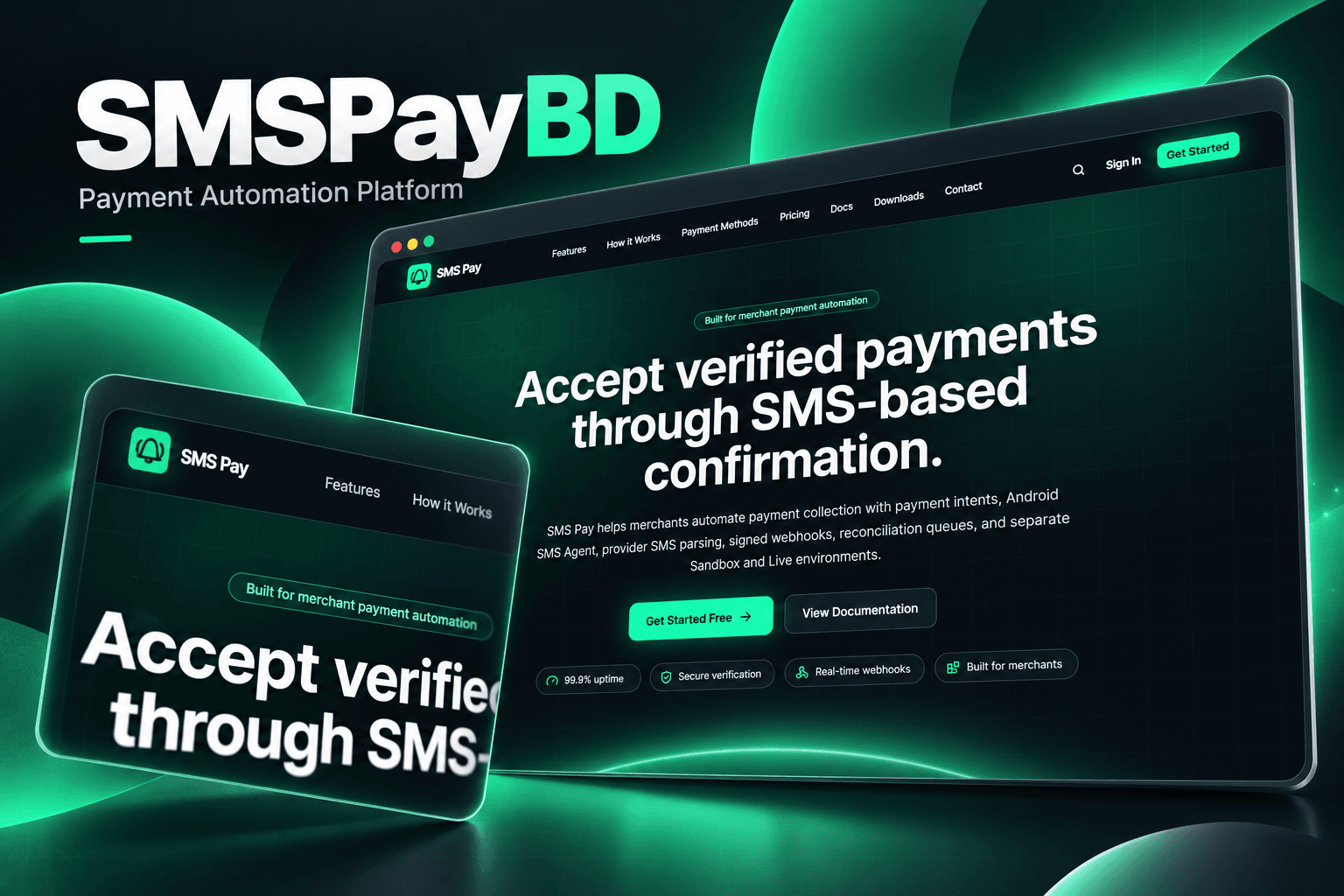
Full Stack · Fintech
SMSPayBD
Multi-tenant SMS Payment Reconciliation Platform
Next.js · NestJS · TypeScript · PostgreSQL

Full Stack · Dashboard
WeTrainEducation & Tech
A unified enterprise solutions platform for business growth
Next.js · TypeScript · Tailwind CSS · shadcn/ui
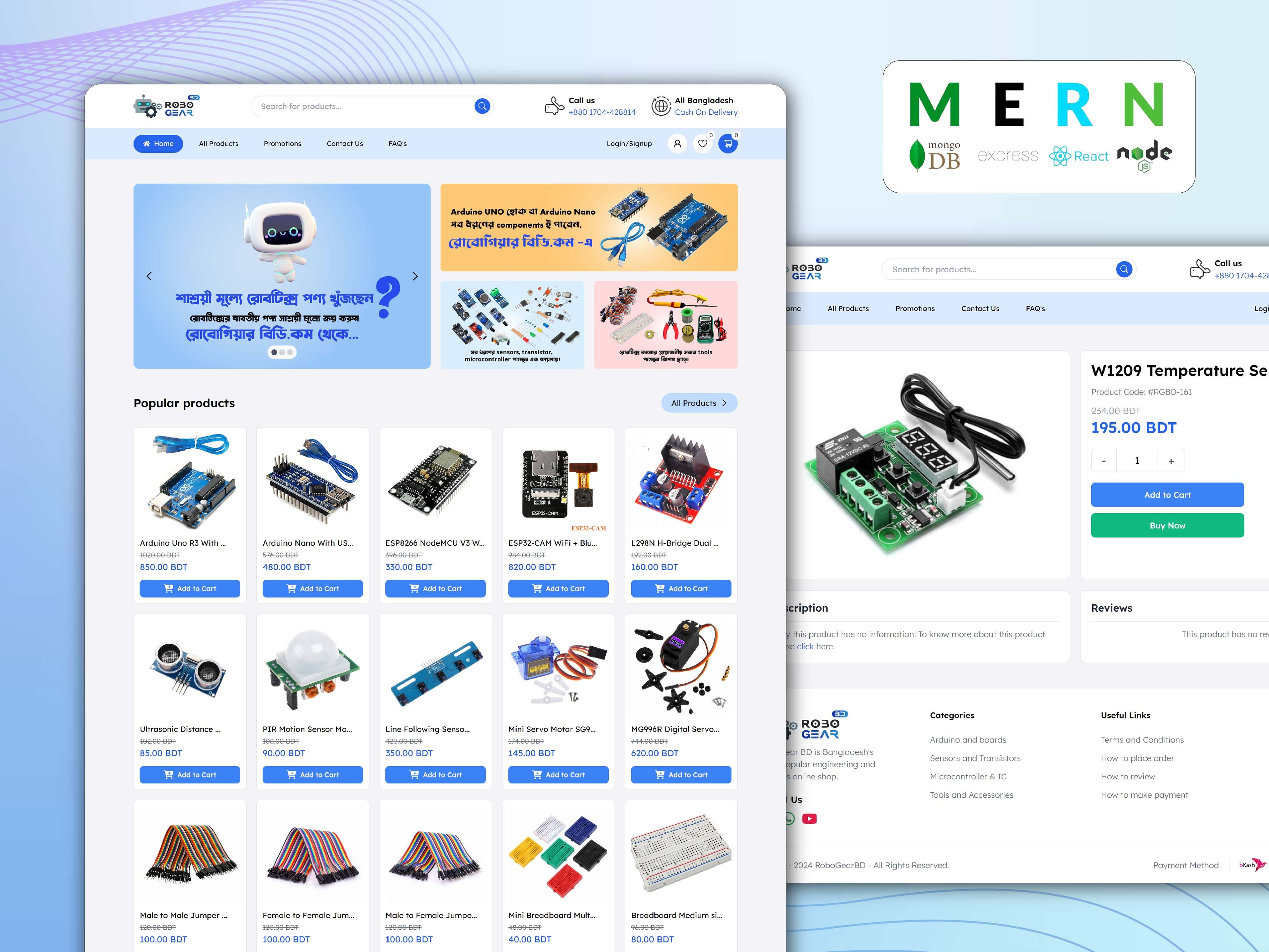
Full Stack · E-commerce
Robogear BD
Online Robotics Shop
HTML · CSS · JavaScript · Tailwind
 Newsletter
Stay in the Loop
Occasional emails about new projects, blog posts, and what I'm building - no spam.